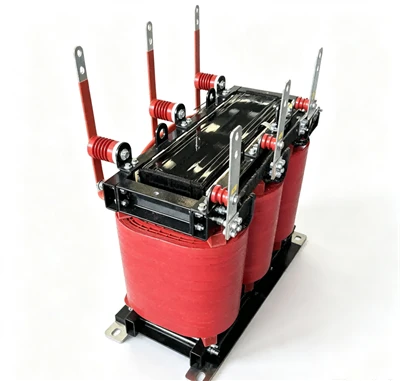
A. In addition to the factory tests conducted by the manufacturer, new transformers should undergo on-site core inspection before installation and commissioning; the same applies after major overhauls. (This is not necessary for short-distance transport without bumps, but withstand voltage tests should still be performed).
B. If a transformer has been out of service for more than six months, its insulation resistance should be measured, and an oil withstand voltage test should be performed.
C. Upon initial commissioning, a transformer should undergo ≤5 full-voltage closing impulse tests; after a major overhaul, this should be ≤3. It should also run under no-load for 24 hours without any abnormalities before gradually introducing load; all records should be kept. The purpose is to check whether the transformer's insulation strength can withstand the rated voltage or operational overvoltages, and also to assess the transformer's mechanical strength and the reliability of relay protection operations.
D. The insulation resistance of newly installed and overhauled transformers, at the same temperature, should not be less than 70% of the manufacturer's test value.
E. To improve transformer utilization and reduce losses, a transformer load current of 75-85% of the rated current is generally considered reasonable.